
Burnout Isn’t Always About Too Much Work
Mar 13, 2026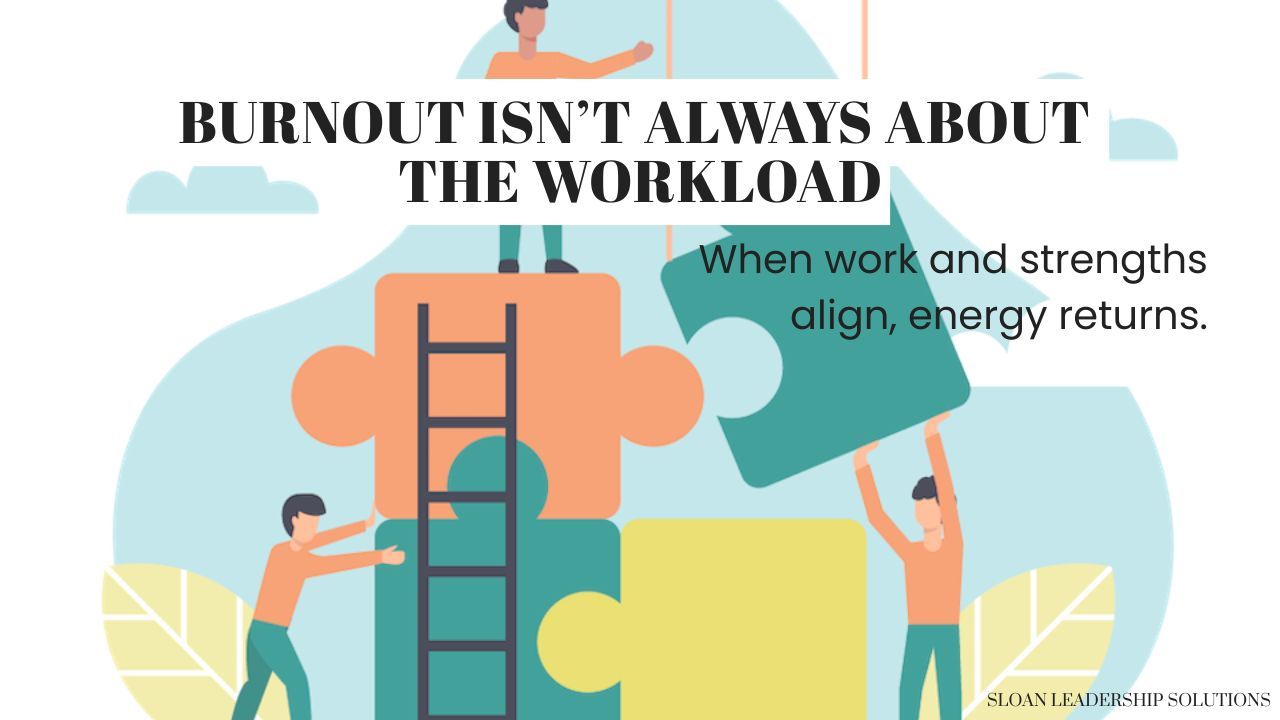
Burnout and the Work That Gives Energy
One of the conversations I hear most often from school leaders is simple and honest.
“I’m exhausted.”
Leadership carries real weight. The calendar fills quickly. The decisions never fully stop. Students need support, teachers need guidance, families need answers, and the leader often stands in the middle of it all.
Yet when I spend time talking with leaders, something interesting often becomes clear.
Two leaders can carry similar workloads and experience their work very differently. One feels energized by the work, even in demanding seasons. Another feels completely drained.
The difference often comes down to something deeper than workload.
It comes down to whether the work connects to a leader’s strengths and sense of purpose.
When people regularly spend time in work that fits how they naturally contribute, the work tends to generate energy. They experience moments of momentum and satisfaction. They see the impact of what they are doing and feel connected to it.
When someone spends most of their time in responsibilities that do not align with how they are wired, the experience begins to shift. The work may still be important. It may still be done well. But over time the energy fades.
This pattern shows up often in schools.
Every leadership team has individuals who are dependable and capable. They are organized. They follow through. They solve problems. When something needs to be handled well, their name naturally comes to mind.
So they are given more.
They lead another initiative. They take on another responsibility. They manage another project.
And they deliver.
But competence and passion are not always the same thing. A person can perform well in an area that quietly drains their energy. When leaders continue assigning responsibilities based only on who can do the work well, some of the most dependable people on the team slowly begin to lose their sense of joy in the work.
Sustaining leaders over time requires something more thoughtful.
Effective leaders begin by knowing themselves well. They understand the parts of their work that bring energy and the responsibilities that consistently leave them depleted. They pay attention to when they feel most engaged and when they feel disconnected from the work.
That self-awareness becomes even more important when leading others.
Leaders who take time to understand the strengths and motivations of their team begin seeing their people differently. They notice the teachers who come alive when they are building relationships with students. They notice the staff members who love solving complex problems or creating systems that make things run smoothly.
One of the most helpful tools I have used with leadership teams is The Six Types of Working Genius developed by Patrick Lencioni. The framework helps explain why certain types of work naturally bring joy while other types tend to create frustration.
Every person has areas where their contribution feels natural and energizing. These are the activities where ideas flow easily and momentum builds quickly. At the same time, there are areas where the work requires significantly more effort and tends to create frustration.
When leaders begin to understand these patterns, their perspective on team leadership begins to shift.
They begin asking different questions.
Who on our team naturally generates ideas?
Who helps bring clarity when the path forward feels uncertain?
Who enjoys building systems that help people succeed?
Who finds satisfaction in execution and completion?
When people are able to spend more of their time contributing through their strengths, something meaningful happens within a team. Energy grows. Collaboration improves. People feel valued for what they uniquely bring rather than trying to operate in ways that do not fit them.
This kind of alignment creates healthier leadership environments and helps sustain people over the long term.
Purpose-driven leadership pays attention to these dynamics. It recognizes that sustaining people in leadership requires understanding the human side of work.
When leaders know themselves and take time to understand the people around them, they build teams where individuals can contribute in ways that create both effectiveness and fulfillment.
Schools are complex environments that will always require hard work.
But when that work connects with purpose and strengths, leaders and teams often rediscover the energy that drew them into education in the first place.
Stay connected with news and updates!
Join our mailing list to receive the latest news and updates from our team.
Don't worry, your information will not be shared.
We hate SPAM. We will never sell your information, for any reason.
